
 AI-generated content
·8 min read
Why shouldn’t you wait to adopt AI agents in your ecommerce store?
Waiting may reduce technology risk, but it postpones the learning that can only happen with your catalogue, processes and customers.
A shopper has found the product they want. The colour is right, the price works and their usual size is available. Then they reach the question the product page does not really answer: “Will this actually fit me the way I want it to?” They open the size chart, read the measurements, scroll through reviews and compare photos. One person says it runs small. Another says it is true to size. The buyer still does not know. So they guess. Days later, when the product comes back, the store records a sizing and fit return—even though the decision that caused it happened before the order.
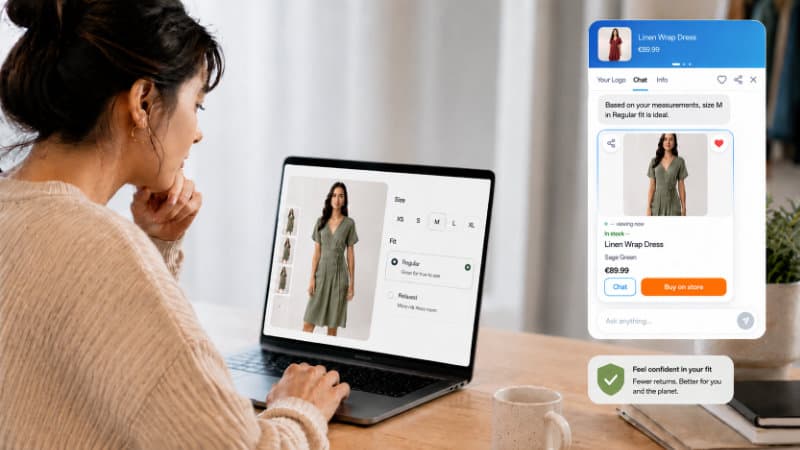
What if that uncertainty were not the end of the journey? Instead of forcing the shopper to interpret a chart, reviews and generic fit labels alone, they could ask a conversational assistant what they actually want to know: whether the shoulders run narrow, whether the cut is relaxed or fitted, how one size compares with another, or which option better matches the way they want the product to sit. The assistant can use the product and variant information available to help them choose before checkout. The return may still happen, but the buyer no longer has to order without being able to ask.
 AI-generated content
To reduce sizing and fit returns, the practical answer is not another promise of perfect fit. It is to reduce the number of decisions shoppers make with missing context. A size chart tells them the numbers; it rarely tells them which numbers matter for the fit they want. Reviews provide experience, but often from people with different proportions and preferences. Product photography shows a styled outcome, not how two adjacent sizes differ.
A useful pre-checkout experience brings those facts into one conversation. The shopper asks a specific question, the store surfaces the relevant catalogue evidence, and the answer stays within what that evidence supports. If the shirt has a close shoulder and a regular body, say that. If the next size adds two centimetres at the chest but barely changes the length, make that comparison. If the information is missing, say so clearly rather than turning a guess into a recommendation.
It is worth being precise, because “sizing and fit” hides three separate losses that behave differently.
The return is the loss everybody notices because it comes back in a box. The other two are quieter. They are not caused by a lack of sizing information alone; they are caused by making the customer interpret all of that information without being able to ask a follow-up question.
On an online store, size charts, model information, product descriptions, material notes and reviews sit in different places. That feels normal until a shopper needs to combine them into one decision. Then having information available is no longer the same as helping someone understand what it means for them.
A conversational storefront breaks the problem apart. Instead of expecting the shopper to translate static information into a fit decision alone, it gives them somewhere to ask naturally. They can compare two products, ask how a garment is cut, understand where it is fitted or loose, compare measurements between variants and work out which option is closer to what they want before reaching checkout.
Example — a sizing conversation before checkout
Shopper: I normally wear an M, but I hate shirts that pull across the shoulders. How does this one fit?
Assistant: This style has a regular body with a relatively close shoulder. If shoulder room matters more than keeping the torso fitted, the Relaxed Oxford may suit you better in your usual size.
Shopper: Is the chest much wider on the relaxed one?
Assistant: The chest is slightly wider, but the larger difference is through the shoulder and upper arm. I can compare the measurements side by side.
Without that conversation, the familiar journey is product, doubt, size chart, reviews, uncertainty, then guess, duplicate order or exit. With it, the shopper can move from doubt to a relevant answer, compare the available evidence and make a more informed choice. The difference is modest but important: the store gets a chance to answer the question while the decision is still reversible.
A conversational storefront cannot guarantee that a product will fit somebody perfectly. Bodies differ, preferences differ, materials behave differently and two people with the same measurements can want completely different outcomes. If the product data does not contain enough information to answer reliably, the assistant should not invent it.
Any tool promising to eliminate sizing and fit returns entirely is overselling. There will always be returns because somebody changes their mind, prefers another silhouette, finds the fabric feels different in person or simply dislikes how the item looks when they put it on. We would rather say the narrower true thing: a conversational storefront can reduce the number of sizing and fit decisions customers have to make blindly.
It is not a virtual fitting room, a body scanner or a replacement for professional garment measurements. It should never say “this will definitely fit you” unless the available evidence could genuinely support that certainty—which, in ordinary ecommerce, it usually cannot. The purpose is to reduce guesswork, not replace it with AI confidence.
The worst outcome is not that the shopper has to read a measurement table. It is that they have a specific question and the store responds with information that does not answer it. A conversational layer lets the question stay specific:
The assistant answers from product and variant information it actually has. Where there is a meaningful comparison, it makes it. Where there is not enough information, it says so. The conversational storefront does not replace the size chart, product measurements or good product data. It makes that information easier to use by turning it into a conversation.
This part belongs to the merchant. The person managing the catalogue needs to give each product enough useful sizing and fit information to work from. A conversational assistant cannot rescue vague product data. If every item says “regular fit” and nothing else, there is little to explain. If the catalogue includes meaningful measurements, cut information, variant differences, material behaviour and relevant fit notes, the assistant has evidence it can use.
Example — useful product information
This style has a regular fit through the body with a closer shoulder.
The fabric has very little stretch.
Compared with the Relaxed Oxford, the chest is similar but the shoulder is narrower.
Useful inputs can include garment measurements by variant, the model’s size and measurements, cut and rise, stretch, fabric composition, intended silhouette, known differences from nearby products and consistent fit notes. They should be structured, maintained and written so a person could defend the answer. When the catalogue changes, the source data needs to change too.
The conversational storefront connects to your catalogue on Shopify, WooCommerce, Wix or Amazon and keeps a structured copy of product information. That is what the AI shopping assistant answers from when a shopper asks about a product, variant, size or difference between two fits.
This is not a substitute for accurate measurements, good photography, clear product descriptions or a sensible returns policy. If the product data is wrong, the assistant has bad information to work from. The argument is simply that when the information exists, the customer should be able to ask about it in the same way they would ask a person in a store.
AllHub is in soft launch. The first ten stores on each platform get three months free. The price is not money—it is ten minutes on a call, once a week.
We are looking for merchants with real customers asking real sizing and fit questions, run by someone willing to show us where those conversations help, where the catalogue is missing information and where the assistant gets something wrong. What you get back is the founders’ direct attention and setup done with you rather than handed to you.
You are not going to eliminate sizing and fit returns, and you should be suspicious of anyone selling you that. What you can decide is whether the shopper has to make the decision alone. For most stores, the answer to “will this fit me the way I want?” is still a chart, a few measurements and somebody else’s review. If the buyer remains unsure, they leave, order more than one size or guess.
If sizing and fit are already driving returns in your category, the question is not only how to process those returns better. It is how many began as a question nobody answered before checkout.
Give buyers somewhere to ask before they order. If your store has real sizing and fit questions, request early access—ten stores per platform, three months free, ten minutes of honesty a week.
Written by AllHub Team · AI Agents for Ecommerce
We build the AI agent team that sells, supports and grows ecommerce stores — EU-hosted, GDPR-first.
This article was created with the help of AI and reviewed by our team. We take great care over every post and every translation, but the odd mistake can still slip through. If you find one, write to us: you will be helping us improve.
AI-generated contentWaiting may reduce technology risk, but it postpones the learning that can only happen with your catalogue, processes and customers.
 AI-generated content
Before connecting an AI agent, define the friction you want to remove, the signals that prove it exists and the evidence you will use to assess the result.
 AI-generated content
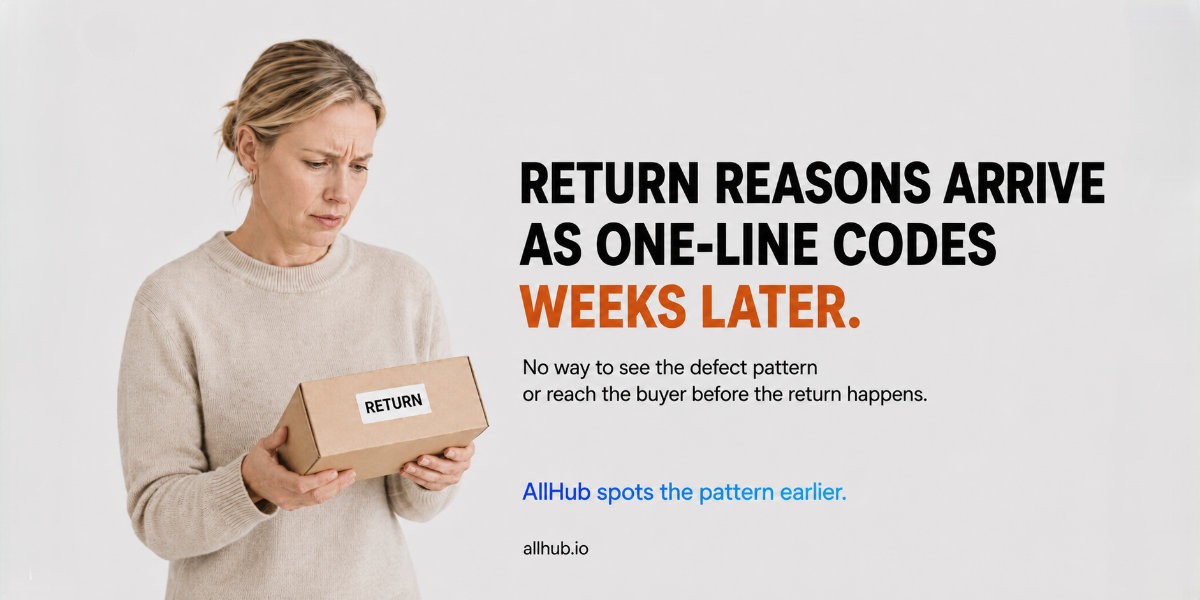
A return code records the end of a customer journey in one line. It rarely preserves the question, failed feature or service delay that made the return inevitable—and it arrives too late to help that buyer.